Top Takeaways and Key Concepts
- Choose tools based on survival needs by assessing environment, trip length, and possible threats.
- Carry a reliable survival knife and practice safe handling for cutting, carving, and food prep.
- Use bows or firearms responsibly only with proper training and awareness of local laws.
- Create improvised weapons when necessary using natural materials and creativity for defense.
- Practice weapon skills regularly to build confidence, accuracy, and calm reactions in emergencies.
Summary of This Article
This article explains how survival weapons are essential tools for safety and self-reliance in the wild. It emphasizes choosing the right gear based on personal needs, with a strong focus on knives as versatile tools. It also covers bows and firearms for advanced defense, stressing safety and legal awareness. The article encourages using improvised weapons when needed and highlights the importance of regular practice to build skill and confidence in real-life survival situations.
Short Video Version of this Article
It’s really important to have the correct tools when it comes to staying safe. And let’s be honest: a good book or some tasty nibbles are fine, but occasionally you need something sharper. Something… sharp.
Imagine this. You could be out in the wild, or you could just be dealing with that raccoon next door who thinks he owns the area. It’s really vital to know how to keep yourself safe. It could feel like a lot, but don’t worry. We can break it up.
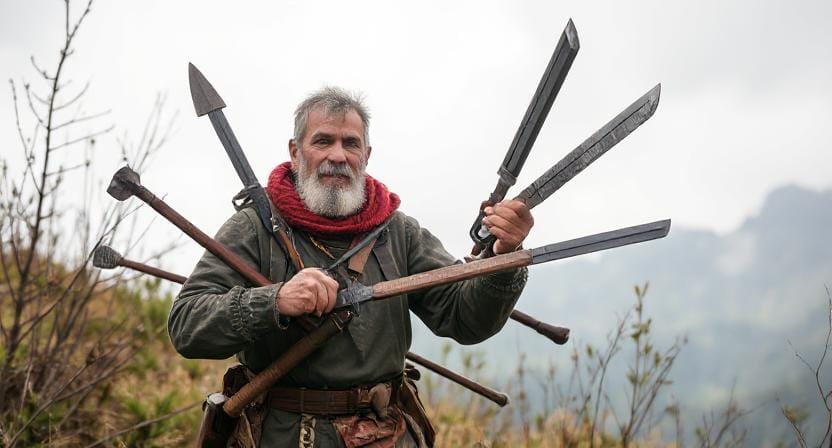
You might want to think about basic gear like knives. They aren’t simply for looks. If things go tough, they can assist you find food or protect yourself. Getting to know them is very important. It’s all about having faith in yourself.
So get that camping chair you love. Make yourself at home. Let’s talk about what you might require and why it can actually help. Half the battle is knowing what tools work for you! It can even make you feel stronger.
Understanding Your Needs
Before we talk about specific weaponry, let’s take a moment to think about what you really need. Are you going to the woods for the weekend? Or are you getting ready for a long stay when supplies can run low? To be honest, knowing your situation will help you choose the right tools.
For short excursions, a strong knife could be all you need. It can chop wood for fires, cut through rope like butter, and even assist you make supper (assuming meal isn’t too busy trying to run away).
You might want something a little stronger, like a bow or a small gun, if you’re going on a longer trip. Just look up the legislation in your area. That can be hard to understand.
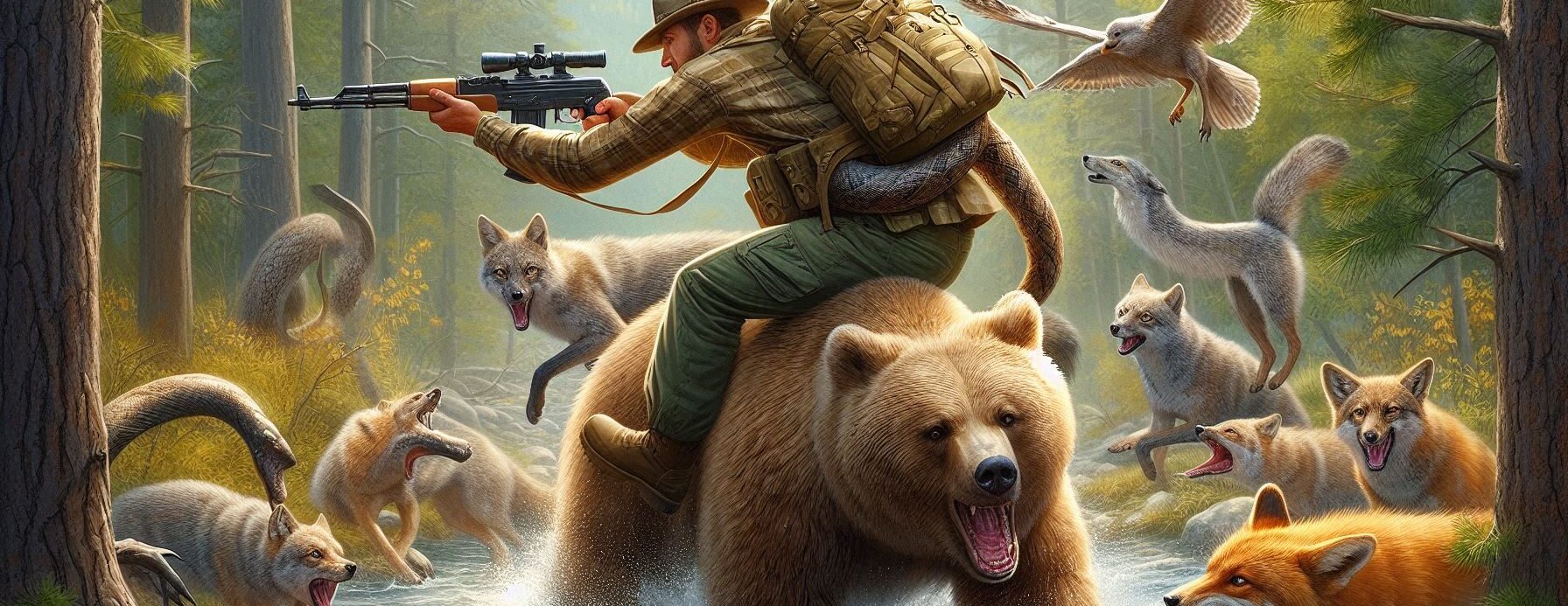
Think about what you might find out there. The biggest danger is always wild animals. Like bears? Most of the time, they just want a snack, not a fight. But they might act differently if they are terrified or trapped. This information can assist you decide what to bring.
Picture this: you’re out hiking and see a bear. Wouldn’t that be a little scary? But if you know that bears are more likely to be hunting for food than to fight, you may relax. Still, it’s important to feel ready. You could feel safer with a bow or another weapon, just in case.
Finding that balance is the key. You want to have fun outside while keeping safe. So, depending on what might happen on your expedition, spend some time to think about what tools will work best for you.
The Trusty Knife
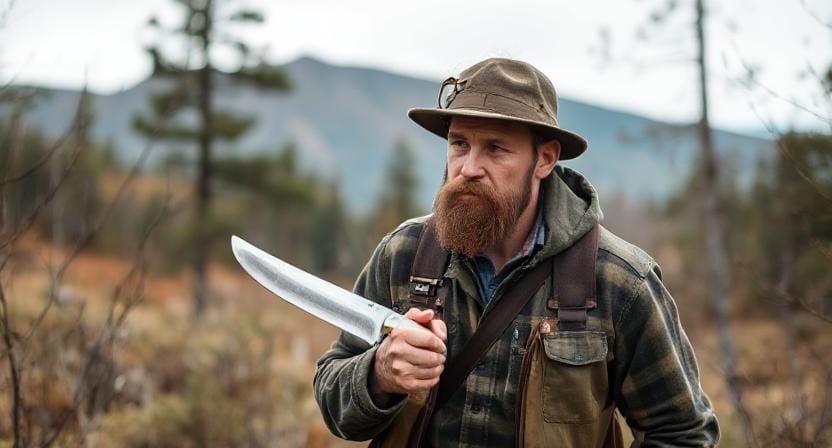
The knife is one of the most useful survival tools. Let’s talk about it. This isn’t just a regular kitchen tool; it’s almost like your best friend in the wild!
A good survival knife should have a strong grip and be composed of materials that won’t break when you try to cut through tough vines (or fight off squirrels that are too aggressive).
Being safe involves using a knife the appropriate manner. Always cut away from your body. I mean, I’ve witnessed way too many “oops” situations around campfires. You don’t want to be a part of that group!
Some simple strategies can definitely assist. For example, carving notches in wood or making little sticks to ignite a fire. It’s the same as become more self-assured. It seems easier when you know what you’re doing. You’ll be amazed at how quickly you get well!
Knives are useful for more than just staying alive. If you catch dinner, great! A knife can help you peel it. That’s great. And don’t forget the best part: roasting marshmallows. You need to whittle sticks for it. Nobody wants to miss out on gooey s’mores, do they?
Your knife is like a good friend. Take good care of it and practice a lot, and soon you’ll be making great meals and having fun around the fire!
Bows and Arrows
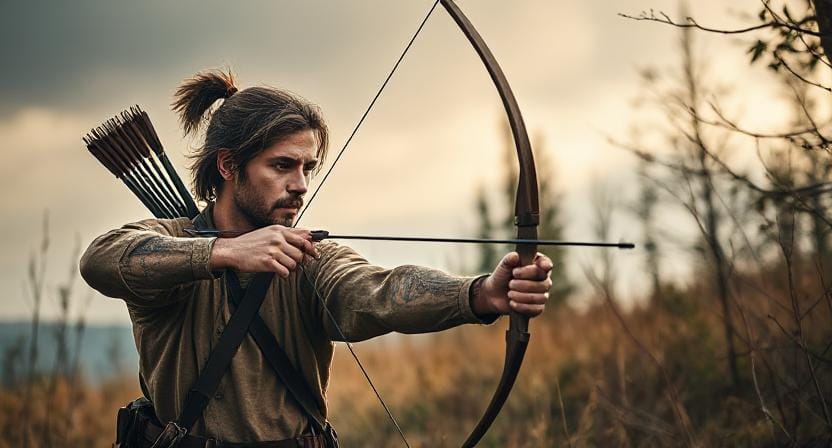
Now that we’ve covered knives let’s move on to bows and arrows—a classic choice straight out of Robin Hood! These beauties allow for stealthy hunting without alerting every creature within earshot of your presence. But before you start channeling your inner archer heroically aiming at imaginary targets, remember that practice makes perfect!
Building your own bow is super fun and, wow, so rewarding! It feels great to create something with your hands. You’ll need strong wood like yew or hickory. These woods are tough but still bend nicely. Perfect for making an awesome bow. And hey, let’s hope you don’t have any “uh-oh” moments along the way!
Once you’ve made your bow, it’s time to practice. Getting good at shooting arrows is key. The way you stand and how you let go is super important. You want those arrows flying straight, not zooming off to the neighbor’s yard. Trust me, you don’t want to repeat what my cousin did last summer. He was trying to impress everyone at a BBQ, and let’s just say his arrow went way off target!
It’s all about getting comfortable with your bow. Practice helps. You’ll feel like a pro before you know it. Imagine the thrill of hitting the target again and again! Plus, it’s a great way to connect with nature and have some fun. Just remember to stay safe and enjoy the process!
Firearms: A Double-Edged Sword
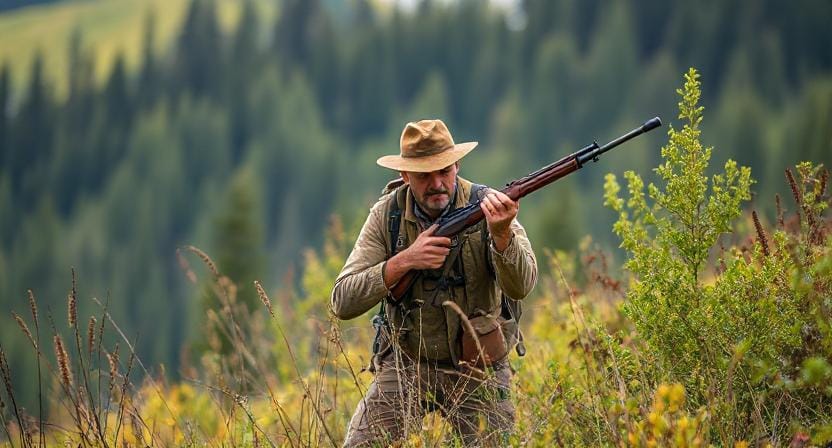
If you’re considering firearms as part of your survival strategy, there are several factors involved that require careful thought—not just because they’re loud but because they come with responsibilities too! First off: do you have training? If not, now’s definitely not the time to learn while surrounded by nature—and possibly angry wildlife.
Firearms can provide significant advantages during dangerous encounters with larger predators such as bears or mountain lions—but they must always be handled safely and responsibly.
Knowing the local laws about guns before you head out into the wild is key. You don’t want to be like Rambo and get in trouble, right? It’s all about being smart and responsible.
Talking about safety, here’s a biggie: never point a gun at anything unless you’re ready to shoot. That includes those annoying mosquitoes buzzing around your head. Seriously, it’s easy to get carried away, but safety first!
When you’re traveling, think about how you store your gun. Keeping it secured is super important. You don’t want anyone accidentally firing it while digging around for snacks in your backpack. Picture it: you’re reaching for that granola bar, and whoops, things go sideways. Yikes!
Take a minute to check that everything is locked up tight. It helps keep you and everyone around you safe. It’s all about having a good time in nature, not dealing with surprises! So, let’s stay smart and enjoy the great outdoors.
Improvised Weapons
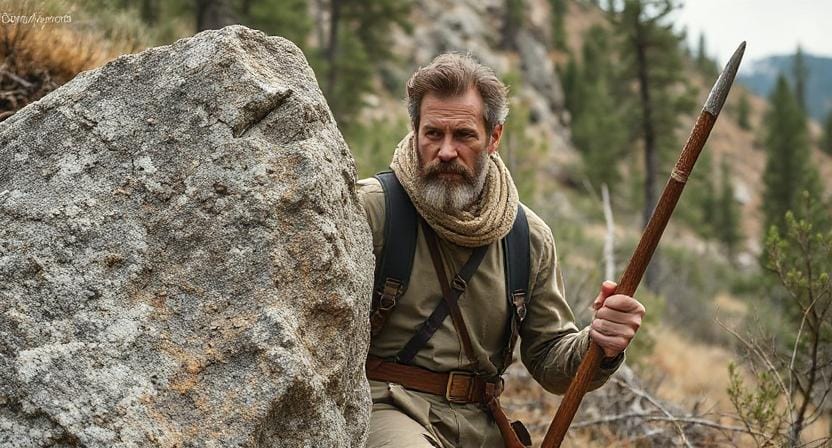
Things don’t always go as planned. For example, you might have misplaced all your stuff save for an old broomstick from when you were cleaning up camp (which could happen!). Fortunately, being able to think on your feet is important when things go wrong. After all, MacGyver didn’t always have sophisticated tools with him.
A broomstick can be quite helpful! Get some sharp rocks and bind them to the end with some rope or yarn you find lying about. If you do it right, you’ll be shocked at how well this works for trapping small animals!
Let’s talk about stones now that we’ve talked about tools. It may seem old-fashioned to throw rocks, but it truly works. Believe me! One night, a raccoon tried to take my goodies. I only had some rocks, so I hurled them. Bam! The raccoon rushed away like it spotted a ghost! How awesome is that?
Sometimes less is more. You don’t need anything extravagant. A little imagination and some simple supplies may go a long way. Picture yourself sitting around the campfire, proud that you got rid of those annoying creatures with just a broomstick and some rocks. It’s all about making the most of what you have.
When you’re out and about, keep an eye out for materials. They can be the best things you have to stay alive. And making things oneself is incredibly fulfilling, isn’t it?
Practice Makes Perfect
We’ve talked about a lot of different choices for survival weapons, but the most important thing to remember is to practice consistently! It won’t matter what weapons you choose, whether they are reliable knives or makeshift tools, if you don’t practice with them first.
It may be a lot of fun to set up entertaining practice settings when camping. Think about how everyone would take turns using different tools. You know, getting used to how they work when things get tough. It’s all about getting used to things so that when the real thing happens, everyone knows what to do.
People don’t want to mess up when something unexpected happens. Give it some thought. It’s not as terrifying when we learn together. You might even laugh about how you got away from those annoying squirrels. They act like they own the place and love to steal food! Keeps things interesting, right?
Being calm is quite useful. Believe me, panicking doesn’t help anyone. So, the more you do it, the easier it will get. It takes practice to become used to riding a bike, right?
On those trips, try to do different things. You could try to make small challenges. Who can build a shelter the quickest? Who can light a fire without using matches? Everyone wants to join in when learning is entertaining.
Soon, you’ll all be experts at using tools and coping with surprises, even the furry ones! Get those supplies and let’s start the practicing excursions!
Choosing the right survival tools can make the difference between safety and vulnerability during outdoor emergencies. From knives and bows to improvised weapons, it’s important to understand how each tool works, when to use it, and how to handle it safely with practice and preparation.
Frequently Asked Questions
What is the most important survival weapon to carry?
The most essential survival weapon is a reliable fixed-blade knife because it can be used for cutting, carving, food preparation, shelter building, and basic defense.
How do I choose the right survival weapon for my needs?
Select weapons based on your environment, trip length, and possible threats while considering what you can comfortably carry and safely use.
Are bows and arrows practical for survival?
Yes, bows are silent, reusable, and good for hunting, but they require consistent practice to use effectively and safely.
Should firearms be part of a survival kit?
Firearms can be valuable for defense against large predators but require training, safe storage, and careful compliance with local laws.
What can I use if I don’t have a weapon?
You can improvise weapons from natural materials like rocks, sticks, and sharpened branches for basic defense or hunting in emergencies.
How often should I practice using survival tools?
Regular practice is essential to build skill, speed, and confidence, especially in stressful situations where clear thinking matters most.
Is it legal to carry survival weapons?
Laws vary by location, so always research regulations for knives, bows, and firearms before traveling or entering public land to avoid legal issues.
Suggested External Resources:
Survival Blog
https://www.survivalblog.com
Wilderness Survival Skills
https://www.wilderness-survival.net
The Ultimate Guide to Survival Weapons
https://www.outdoorlife.com/ultimate-guide-survival-weapons

Kevin Collier is a seasoned outdoor enthusiast and writer for Trekbug.com, specializing in outdoor adventures, survival strategies, and prepping insights. With a deep love for nature and a commitment to self-sufficiency, Kevin empowers readers to embrace the wilderness confidently. He shares valuable tips, practical techniques, and inspiring stories, helping both novice and experienced adventurers develop essential skills for surviving and thriving in the great outdoors.